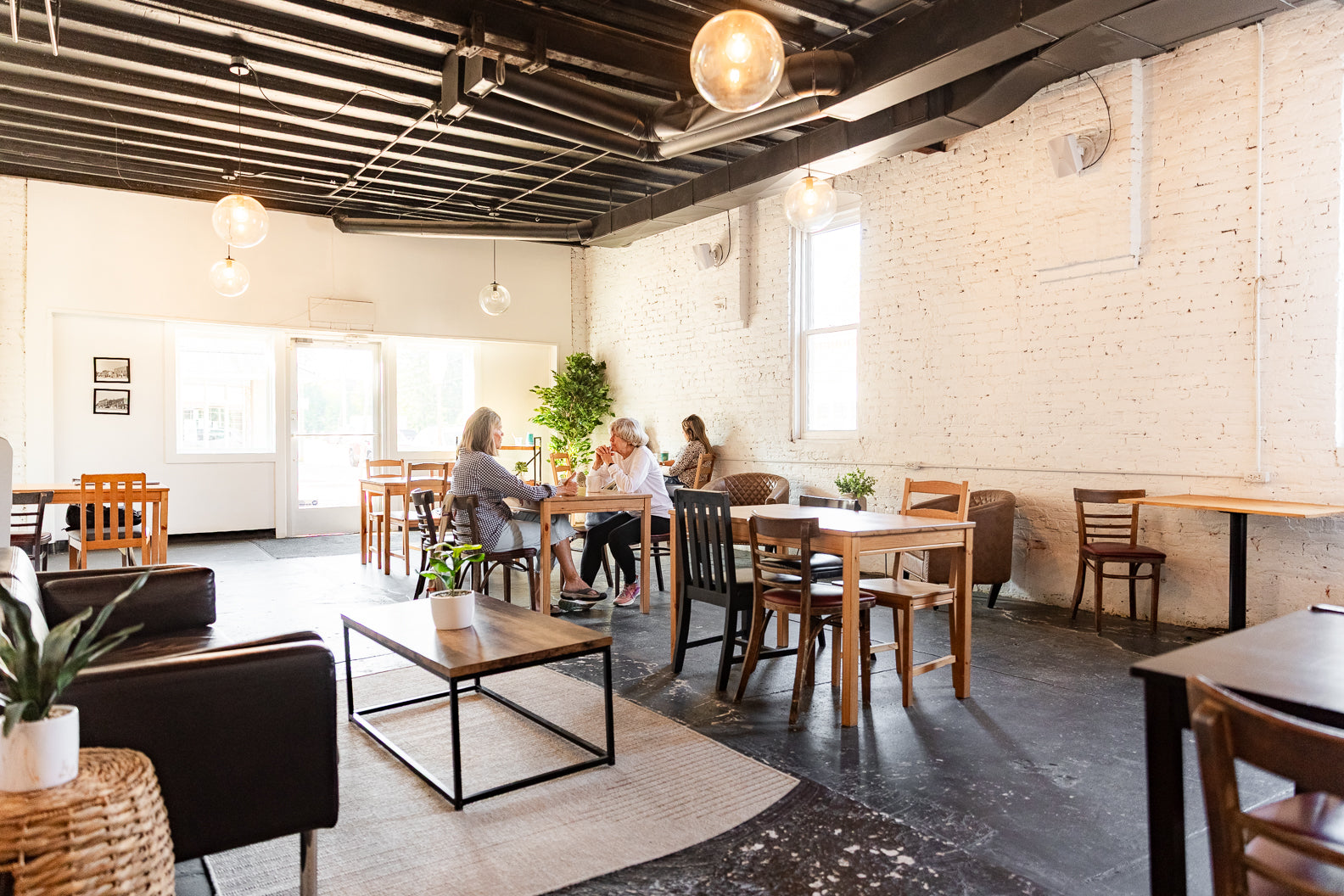
Coffee as Hospitality: How Churches Can Build Connection, Community, and Ministry Through a Thoughtful Coffee Program

On a typical Sunday morning, churches across the country welcome people carrying far more than a Bible and a bulletin.
They arrive with questions, fatigue, curiosity, skepticism, hope, and sometimes anxiety. For many, walking into a church building—especially for the first time—can feel intimidating. Where do I sit? Will I know anyone? Will someone notice me?
Often, the first thing they encounter isn’t the sanctuary.
It’s the lobby.
And more often than not, it’s a cup of coffee.
For many churches, coffee has become a default amenity—something expected, rarely discussed, and frequently minimized. It’s free, so it’s cheap. It’s just coffee. People shouldn’t complain.
But that assumption misses something important.
Coffee is not just a beverage.
It’s a vehicle for hospitality.
And hospitality has always been central to ministry.
This article is written for church leaders—pastors, operations teams, hospitality volunteers, and decision-makers—who want to think more intentionally about how coffee can support connection, conversation, and community in their church.
Not as a gimmick.
Not as branding.
But as a way of caring for people well.
Why Church Coffee Is Often Bad (and Why That Matters)
Let’s be honest: church coffee has a reputation—and not a great one.
In most cases, it’s not bad because churches don’t care. It’s bad because coffee is often treated as an afterthought. An expense to minimize. A box to check.
When that happens, decisions get made based on cost alone:
-
The cheapest coffee available
-
Equipment that can’t keep up with volume
-
No training or clear standards
-
Volunteers left to “figure it out”
The underlying message—whether intentional or not—becomes:
“This doesn’t really matter.”
But here’s the tension: churches care deeply about people. They invest time, prayer, staff, buildings, and programming to create meaningful environments for spiritual growth. Yet one of the most consistent touchpoints for guests and members alike—the coffee experience—is often overlooked.
If the goal of Sunday morning is simply to get people in and out, fast bad coffee might accomplish that.
But if the goal is connection, conversation, and community, coffee can either hinder or help that mission.
Coffee as a Vehicle for Ministry, Not a Luxury
Coffee itself isn’t ministry.
But hospitality creates space for ministry to happen.
A good cup of coffee does something subtle but powerful:
-
It invites people to linger
-
It lowers social barriers
-
It gives people something to do with their hands
-
It creates a natural reason to talk
For someone not ready to join a small group, serve on a team, or share their story, coffee can be the first safe step toward connection.
When done well, coffee communicates:
-
You matter
-
We thought about your experience
-
You are welcome here
And that message lands before a word is preached.
Rethinking the Cost: From Cost per Cup to Cost per Conversation
One of the most helpful reframes for church leaders is this:
Stop thinking about coffee as cost per cup.
Start thinking about coffee as cost per conversation.
What is a meaningful connection worth?
What is a first-time guest feeling welcomed worth?
What is a conversation that leads someone to return worth?
Churches regularly invest in:
-
Signage
-
Guest materials
-
Marketing
-
Staff positions
-
Facility upgrades
All of those investments exist to help people feel seen, known, and cared for.
Coffee should be evaluated in the same way.
Craft coffee shops don’t become hubs of community by accident. They focus on hospitality and product quality working together. Not because coffee is magic—but because people respond to environments where care is evident.
Common Mistakes Churches Make with Coffee Programs
1. Buying the Cheapest Coffee Possible
The assumption often sounds like this “It’s free, so people shouldn’t complain.”
But cheap coffee always has hidden costs:
-
It communicates a lack of care
-
It creates negative first impressions
-
It reinforces the stereotype of church coffee being bad
If you’re comfortable with that impression, then cheap coffee may be fine. But if you’re looking for more ways to communicate that people matter, coffee should eventually be part of that conversation.
2. Underbuilding for Capacity
Another common mistake is purchasing equipment that cannot handle the size of the congregation.
This leads to:
-
Long lines
-
Burnt or stale coffee
-
Volunteer frustration
-
Inconsistent quality
Churches grow. Coffee programs should be able to grow with them.
3. Introducing Espresso Too Early
Espresso can be a powerful tool—but it dramatically increases complexity.
Espresso requires:
-
Higher skill levels
-
Consistent training
-
Regular maintenance
-
Time and attention
For most churches, especially those under several hundred people, great batch-brewed coffee is a far better starting point.
Espresso often makes the most sense for:
-
Larger churches
-
Churches with weekday cafés
-
Churches with dedicated staff oversight
-
Churches ready to invest in training and systems
4. Lack of Vision Alignment
Perhaps the biggest challenge isn’t technical—it’s cultural.
If the lead pastor or senior leadership doesn’t see the value of coffee as hospitality, conflict and misalignment often follow. Volunteers feel undervalued. Budgets feel questioned. Teams lack clarity.
When leadership casts a clear vision for hospitality—coffee included—execution becomes much easier.
Church Size Matters: Different Approaches for Different Congregations
There is no one-size-fits-all coffee solution. The right approach depends on size, goals, and resources.
Churches of 100–200 People
At this size, simplicity is key.
What matters most:
-
Consistency
-
Ease of use
-
Low volunteer burden
-
A welcoming environment
Many churches in this range can create meaningful hospitality with:
-
A reliable commercial batch brewer
-
Fresh coffee sourced weekly
-
Simple recipes from a roaster
-
Ground coffee to reduce equipment and training needs
Investment range:
-
Often under $1,500 for brewing equipment
-
Grinders can be added later if volume and training allow
The focus should be less on variety and more on experience.
How does the lobby feel?
Is it awkward and silent—or warm and inviting?
Churches of 300–800 People
This is where systems begin to matter.
At this stage, churches often have:
-
Staff oversight
-
Multiple volunteer teams
-
Higher volume in short windows
Key priorities:
-
Clear recipes and standards
-
Team leaders for hospitality
-
Equipment that reduces manual workload
-
Alignment around the “why”
This is also a great stage to:
-
Share testimonies of connection
-
Reinforce hospitality vision regularly
-
Invest in higher-capacity equipment
Consistency becomes more important than creativity.
Churches of 1,000+ or Multi-Service Churches
At this scale, coffee becomes an operation.
Key questions include:
-
Is coffee only for church members, or open to the public?
-
Will there be weekday café hours?
-
Is espresso part of the vision?
-
Who owns oversight?
Many churches at this level benefit from:
-
Consulting with café professionals
-
Dedicated café or hospitality managers
-
Clear menus and workflows
-
Intentional training systems
Investment at this stage can range widely, with café-level buildouts often reaching $30,000–$50,000 depending on scope.
Volunteers: From “Just Making Coffee” to Hospitality Mindset
Volunteers are the heart of church coffee programs.
But volunteers need more than good intentions—they need clarity.
When volunteers understand:
-
Why grind size matters
-
Why recipes matter
-
Why freshness matters
They’re empowered to care well.
Great coffee teams usually share a few things in common:
-
Clear leadership
-
Consistent training
-
A shared vision for hospitality
-
Ownership, not just task completion
Coffee teams often become gateways for deeper involvement. They are relational by nature. For many people, serving coffee is one of the safest and most meaningful ways to step into community.
Speed vs Quality: A False Dichotomy
Churches often feel tension between speed and connection.
But the real question isn’t, “Should we be fast or relational?”
It’s: “When should we be fast, and when should we slow down?”
There are moments when efficiency matters—between services, during rushes.
And there are moments when presence matters—at the espresso bar, during quieter times.
Great hospitality teams learn to read the room.
They focus on people, not products.
Coffee supports connection—it doesn’t replace it.
Equipment Philosophy: Simple, Scalable, Forgiving
If there’s one guiding principle for church coffee equipment, it’s this:
Buy equipment that matches your size, skill level, and goals.
Non-negotiables:
-
Fresh coffee
-
A good brewer
-
Equipment that forgives mistakes
Espresso machines are powerful—but they’re not necessary to start meaningful conversations. A great cup of brewed coffee is often the best foundation.
Creativity also matters. Many churches work with partners who offer:
-
Leasing options
-
Wholesale pricing
-
Equipment support
-
Training resources
The goal isn’t perfection.
It’s intention.
The Guest Experience: What Coffee Communicates
For a first-time guest, coffee communicates far more than flavor.
It signals:
-
Care
-
Thoughtfulness
-
Competence
-
Welcome
Subconsciously, people ask: “If they thought this much about something small, how much do they think about the things that matter to me?”
Coffee becomes a lens through which people interpret the larger experience.
Language That Resonates with Churches
Industry language often misses the mark.
Church leaders don’t need “third-wave” terminology.
They resonate with:
-
Hospitality
-
Care
-
Connection
-
Excellence as stewardship
Focus on quality people actually want to drink—served with intention.
Where to Start: One Simple Question for Leadership
If there’s one takeaway from this article, it’s this:
How might we reach our connection goals through coffee?
Not:
-
What equipment should we buy?
-
How cheap can we do this?
But:
-
How do we want people to feel?
-
How can coffee support those goals?
-
Do we have a strategy for hospitality on the days people are already in the building?
Those questions open meaningful conversations.
How Foster Coffee Works with Churches
We work with churches of all sizes—from 100 people to 4,000+ members—helping them:
-
Clarify hospitality vision
-
Choose appropriate equipment
-
Train staff and volunteers
-
Brew consistently great coffee
-
Scale responsibly as they grow
We believe coffee is a vehicle for connecting with people.
And we love helping people explore what’s possible—at any size or budget.
If you’d like help evaluating your current setup, exploring options, or simply talking through ideas, we’re happy to be a sounding board.
👉 Interested in learning more?
Visit our wholesale partnership page to start a conversation. No pressure—just exploration.
Final Thought
People don’t usually come to church just for coffee.
But coffee can help people stay, talk, connect, and feel at home.
And sometimes, that’s where ministry begins.